Beyond Clinical: Rethinking the Modern Medical Interior | House of Apax
House of Apax reflects on the design of a Cape Town aesthetic surgery suite, exploring how medical interiors can feel calm, private and deeply human.
Designing Beyond Function
Most people do not remember every detail of a healthcare space. They remember how it made them feel.
They remember the lighting. The waiting. The quietness. The slight awareness of being vulnerable in a space that is not your own.
Medical interiors have traditionally been designed around function first, and understandably so. These spaces need to work. They need to be practical, hygienic, compliant and efficient. But there is also another layer that is becoming harder to ignore: how a space supports a person emotionally.
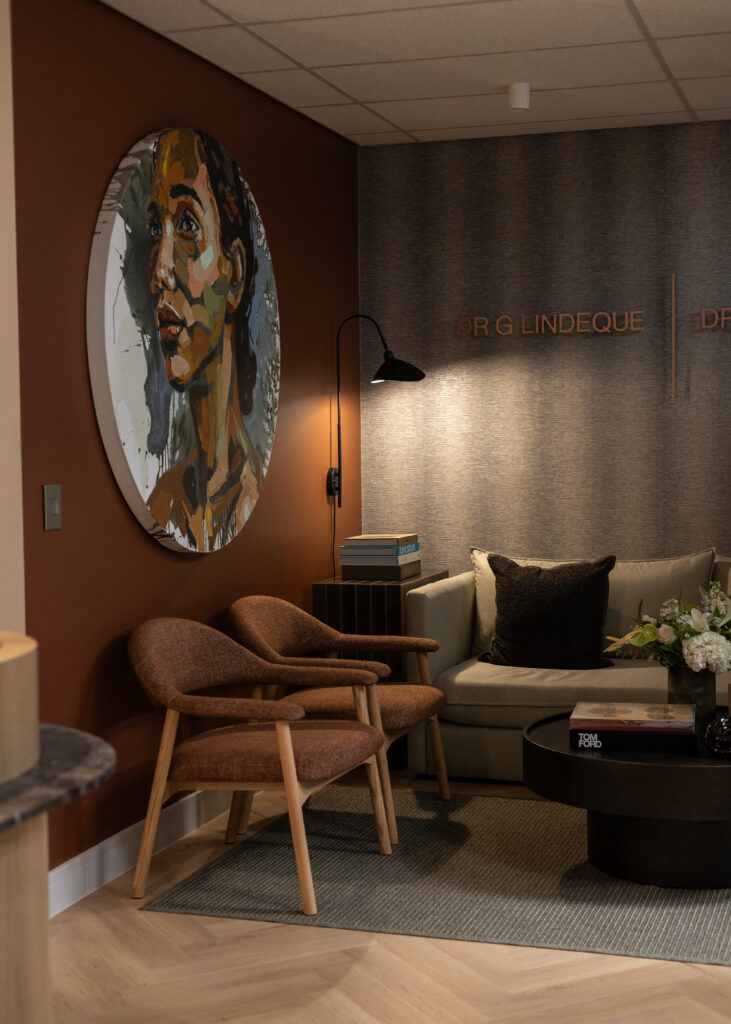
This became especially clear to us during a recent House of Apax project: the interior design of a new aesthetic surgery suite in Cape Town.
What made this project particularly interesting was that, although it was a medical environment, so much of the thinking started to overlap with the way we approach residential design.
A home is designed around comfort, movement, privacy and instinct. It considers how people pause, enter, gather, retreat and exhale. A medical suite requires a very different technical framework, but the emotional questions are not entirely different.
How should someone feel when they arrive?
How can the space create calm without feeling overly styled?
How do you design privacy into the experience, rather than treating it as an afterthought?
And most importantly: how do you create a medical environment that still feels human?
Borrowing From Residential Design
Aesthetic surgery spaces hold a particular kind of sensitivity. Patients are not only arriving for a procedure. They may be arriving with nerves, expectation, vulnerability or a deeply personal reason for being there.
That immediately changes the role of the interior.
For this suite, the focus was not only on making the space look beautiful. It was about creating an atmosphere that felt calm, discreet and considered.
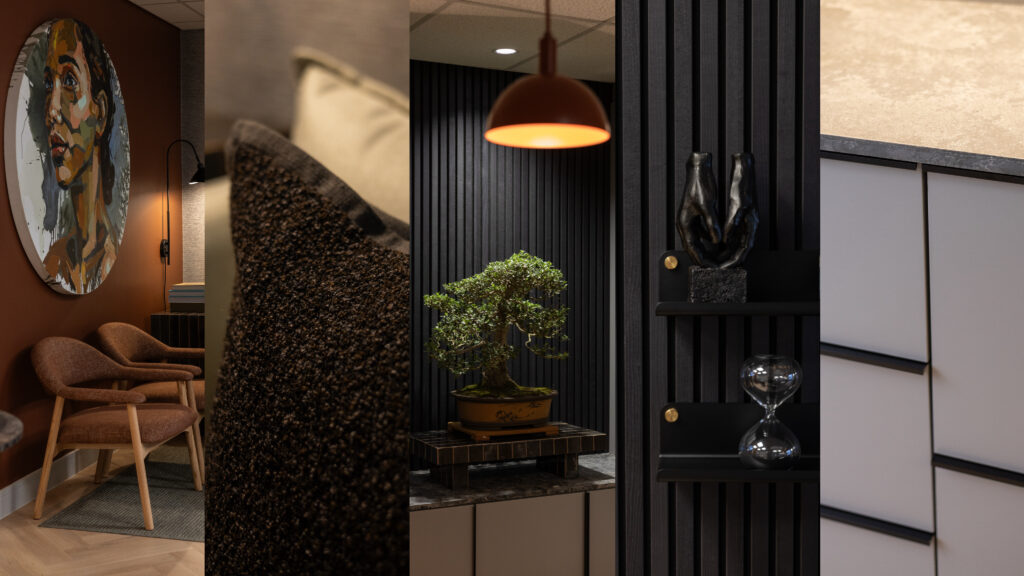
Lighting had to feel soft, but still serve a practical purpose. Materials needed to feel elevated, but remain appropriate for a medical setting. The layout had to guide people through the space naturally, without making the experience feel exposed or overly clinical.
This is where residential design thinking became useful. Not because the suite needed to feel like a home, but because it needed to understand people in the way a good home does.
Privacy as a Design Language
One of the most important parts of the project was privacy.
In residential interiors, privacy often creates a sense of safety. In a medical environment, that sense of safety becomes even more important.
Privacy is not only about what can or cannot be seen. It is also about what can be heard. How people move through a space. How protected a conversation feels. How exposed or at ease a patient feels from one room to the next.
For that reason, soundproofing and acoustic treatment became a key part of the design process.
The aim was not simply to reduce noise. It was to create a space where conversations felt protected, where movement felt discreet, and where patients could feel less aware of everyone else around them.
That kind of detail can be easy to overlook because it is not always immediately visible. But it is often what changes the experience of a space completely.
A Collaborative Process
This project was also a reminder that successful interiors are rarely created in isolation.
Close collaboration with the doctors helped shape many of the practical decisions. Their insight made sure that the suite functioned properly from a medical and operational point of view.
At the same time, the project brought together suppliers, artisans and specialist contributors whose work formed part of the final environment.
Good design often depends on these layers working together quietly. The materials, finishes, lighting, acoustics and spatial planning all have to support the same experience.
When that happens, the space begins to feel resolved.
Redefining Luxury in Healthcare
Luxury in healthcare design is changing.
It is no longer only about expensive finishes or a visually impressive space. Increasingly, luxury is being defined by comfort, calm, discretion and ease.
It is in the way a patient is welcomed.
It is in the softness of the lighting.
It is in the quietness of the room.
It is in the feeling that someone thought carefully about the moments that may feel vulnerable.
In many ways, that is not so different from good residential design. The best interiors are not only beautiful. They understand what people need from them.
This project reminded us that medical spaces do not need to feel cold in order to function well. Clinical environments can still feel warm. Professional spaces can still feel emotionally intelligent.
And sometimes, the most successful interiors are the ones that simply allow people to exhale.