
South African Interior Design: Why Great Design Starts with Place, Not Trend
South African interior design is becoming recognised for something far more meaningful than following global trends. As designers, we’re increasingly asked what truly defines it. The answer is more nuanced than a particular style or aesthetic. Every June, South Africa’s design industry turns its attention to Decorex. Designers, architects, makers, suppliers and homeowners gather to celebrate innovation, craftmanship and the future of design. Amid the excitement of new launches, emerging trends and beautiful installations, there is a question that continues to shape the future of our industry:
What does South African design actually look like?
For years, South African interiors have often been viewed through the lens of international trends. Scandinavian minimalism, industrial loft aesthetics, Mediterranean influences and contemporary European design have all found their way into our homes. While these influences have undoubtedly shaped the industry, they do not fully answer the question of what makes a space feel unmistakably South African.
The answer lies not in a single aesthetic, but in something far more meaningful. South African design is not defined by a particular colour palette, furniture style or architectural language. It is defined by context, climate, landscape, culture and the way people live.
The Influence of Place
Great South African interior design begins by responding to climate, landscape and the way people naturally live within a space.. The more dramatic coastline of the Western Cape, the bushveld landscapes of Limpopo, the urban energy of Johannesburg and the rolling hills of KwaZulu-Natal all create vastly different landscapes. Designing successfully in South Africa requires a response to these environments, rather than imposing a one-size-fits-all approach.
Our climate encourages a lifestyle that exists somewhere between indoors and outdoors. We spend a significant portion of our lives connected to nature, whether through braai areas, courtyards, gardens or expansive views. As a result, South African homes often prioritise natural light, ventilation and seamless connection between interior and exterior spaces.
This relationship with the outdoors is one of the defining characteristics of local design. It influences everything from spatial planning to material selection. Large openings, textured finishes, natural materials and layered outdoor living spaces are not simply aesthetic decisions, they are responses to the way we live.
Good design begins by understanding this relationship.
A Material Language Rooted in the Landscape
The strongest examples of South African interior design are often the ones that feel deeply connected to their surroundings rather than imported trends.
Across the country, designers are increasingly embracing materials that feel connected to the landscape around them. Stone, timber, limewash, clay, linen and natural fibres bring an authenticity that manufactured finishes often struggle to replicate. Many of the strongest South African interior design projects use material palettes that feel connected to their surroundings rather than imported trends.
These materials age gracefully. They develop character over time. They create spaces that feel grounded rather than overly polished.
Oak remains a favourite because of its warmth and versatility. Natural stone introduces texture and permanence. Linen softens a space while responding beautifully to our climate. Limewash creates depth and movement across walls, adding an organic quality that changes throughout the day as natural light shifts.
The appeal of these materials extends beyond aesthetics. They create a sensory experience. They invite touch. They connect occupants to something real in a world increasingly dominated by digital experiences.
Perhaps this explains why many of the materials we continue to return to as designers are also the ones that have existed for centuries.
They possess a timeless quality that transcends trends.
Designing for South African Living
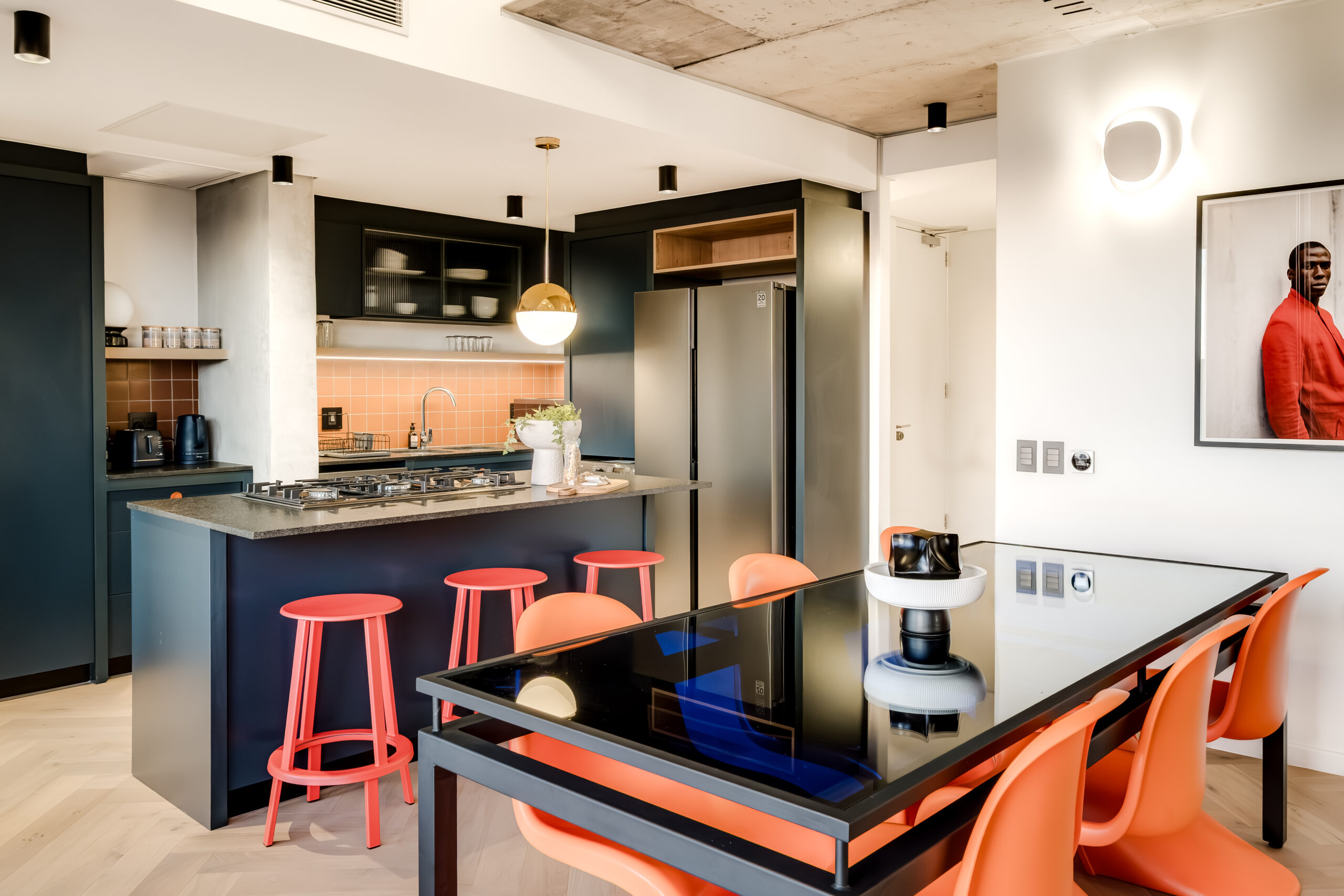
At its best, South African interior design supports real life by creating flexible spaces for entertaining, family life, work and everyday living.
South African homes often serve multiple purposes. They are places of work, entertainment, family gatherings, relaxation and connection. A dining table may host a family dinner one evening and function as a workspace the next morning. A living room may need to accommodate both intimate family moments and large social gatherings.
The best local design solutions recognise this flexibility.
Rather than creating spaces that feel formal or rigid, South African interiors often prioritise comfort, adaptability and human connection. There is a hospitality embedded within many local homes. Spaces are designed not only for those who live there but also for those who visit. The best South African homes are designed around the realities of modern living, creating spaces that can adapt to work, entertainment, family life and relaxation.
This emphasis on generosity and gathering is deeply woven into our culture and naturally influences the way we design.
Beyond Trends
Trends will always exist. Every year brings new colours, finishes and furniture styles. Some will remain while others will fade.
Design identity, however, operates on a different level.
It asks deeper questions.
How does a space support the people who use it?
How does it respond to its environment?
How does it create a sense of belonging?
How does it honour both function and beauty?
These questions remain relevant long after trends have disappeared.
For us, South African design is not about following a prescribed aesthetic. It is about creating spaces that are rooted in place, informed by context and designed for real life.
It is about understanding that a home in Cape Town should not feel identical to one in London, Copenhagen or New York.
The most compelling South African spaces are not trying to be anywhere else.
They are proudly, confidently and unmistakably of this place.
Ultimately, South African interior design isn’t defined by a style. It’s defined by authenticity, context and a genuine sense of place. The future of South African design is not about following global trends. It is about creating homes and spaces that feel authentic, contextual and deeply connected to the way South Africans live.