
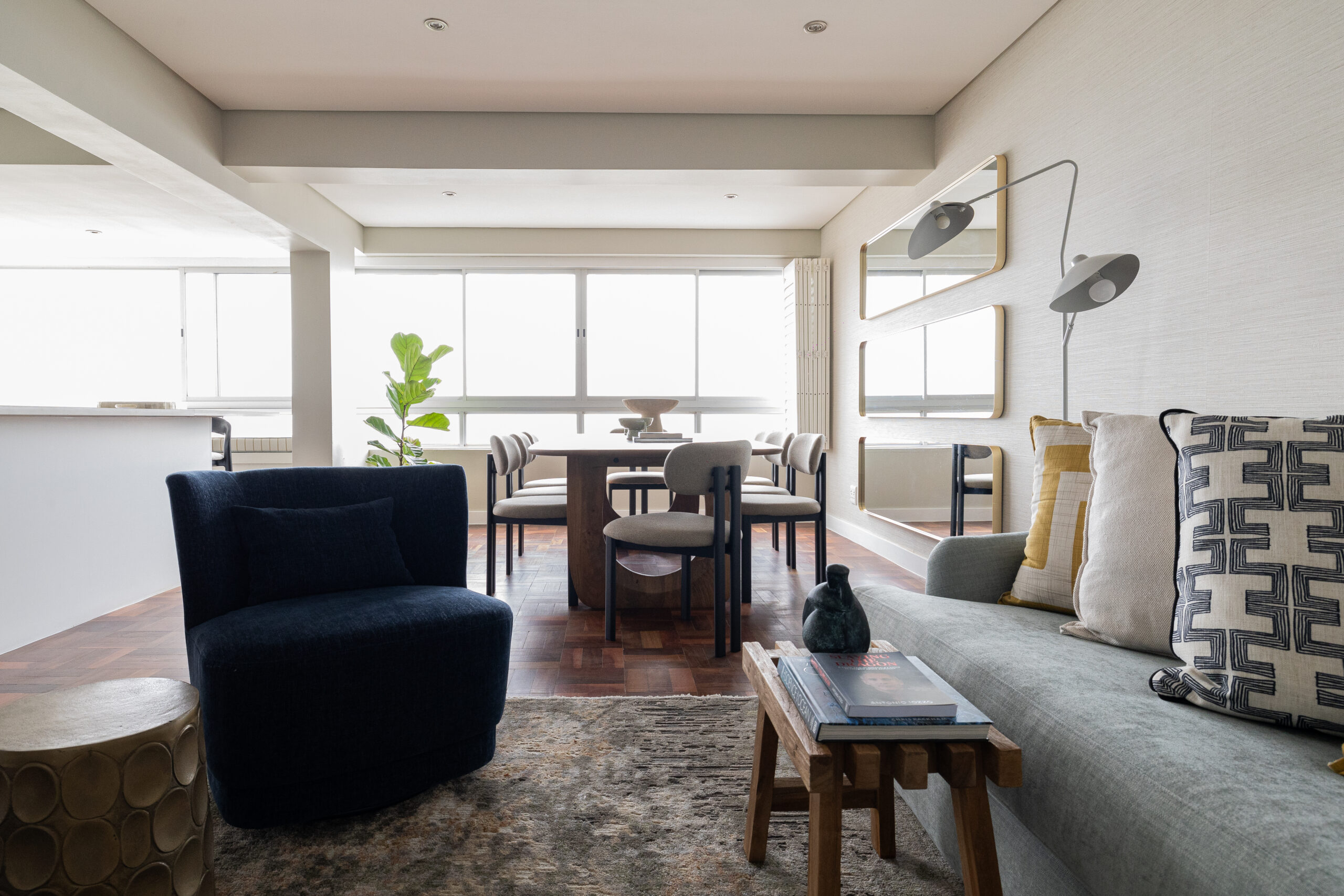
Not everything needs to be replaced when designing
There is a quiet confidence in a space that has not erased itself completely.
In interior design, the instinct is often to begin again — to strip everything back, demolish, replace and renovate in pursuit of something entirely new. But increasingly, the most compelling interiors are doing something far more considered. They are pausing to understand what already exists before introducing something new.
Not out of limitation, but out of intention.
Existing architectural details often carry a richness that contemporary finishes struggle to replicate. The subtle patina of age, the irregularity of natural materials, or a piece of furniture that has evolved over time can bring a depth that newly manufactured perfection rarely achieves.
Spaces begin to feel more human when they are allowed to retain parts of their history.
Reupholstered furniture, restored timber, original stone, inherited objects or materials that are permitted to age naturally within a space all contribute to interiors that feel layered rather than assembled. These elements create visual tension between old and new — and it is often within that tension that a space becomes memorable.
The Value of a Second Life within Interior Design
Good interiors are rarely shaped through excess alone. They are shaped through restraint, curation and the ability to recognise when something still deserves a place in the room.
Reuse in interior design is often misunderstood as purely practical or environmentally conscious. In reality, it is deeply aesthetic.
Spaces built around existing elements tend to feel more grounded and personal than those designed around constant replacement. They avoid the temporary feeling that comes with designing entirely around trends, because they already carry fragments of lived experience within them.
Giving objects a second life feels inherently human because it acknowledges that not everything meaningful arrives brand new. Some pieces become more interesting with age. More refined through use. More beautiful because of the life they have already lived.
Why Layered Interiors Feel More Luxurious
Perhaps this is the shift happening within contemporary interior design right now.
Luxury no longer feels defined by excess, perfection or uniformity. It feels intentional. Layered. Considered.
The most compelling interiors are not necessarily the ones filled with the newest objects, but the ones where everything feels carefully chosen. Spaces where existing architecture, furniture and materials are not treated as obstacles to work around, but as part of the story itself.
Designing with what already exists creates interiors with a kind of individuality that cannot easily be replicated. Spaces that feel collected rather than manufactured. Evolved rather than decorated.
And perhaps that is what people are truly searching for now — interiors that feel less temporary, less performative, and more deeply connected to the people who inhabit them.